

Sleeping in Makeup
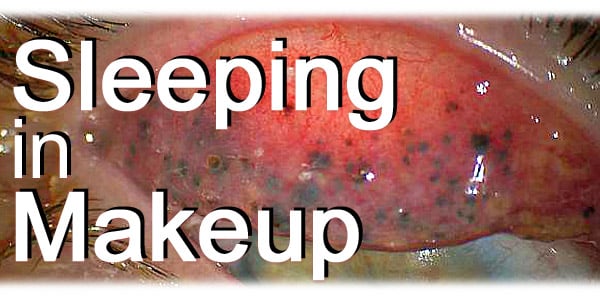
You may have heard about the woman who almost went blind from sleeping in her mascara for years. The study that sparked this story was originally released by the American Academy of Ophthalmology.
While this is certainly an unusual case, it is a reminder that sleeping in your makeup is not advised. The patient “admitted to more than 25 years of heavy mascara use … with inadequate removal”. By the time she sought help her upper eyelids contained “multiple darkly pigmented subconjunctival concretions”. These sandy masses had caused “corneal erosions”. After seeing this story, we though that it would be appropriate for us to ask some of our doctors for answers to some of the related questions we receive frequently. For example, our Ophthalmologists get asked about the safety of sleeping in mascara and eyeliner all the time. The truth is that the risk and results will vary for each patient’s situation, but these general guidelines apply to most.
Below are some of the common questions that our physicians get and the answers.
Can You Take a Nap with Makeup On or Is It Bad to Sleep with Makeup On?
Yes. You can take a nap or sleep with makeup on. However, there is no way to know exactly what effect it will have. Sleeping in your makeup can block pores and cause exposure to excess bacteria.
Is it Bad/OK to Sleep with Mascara On?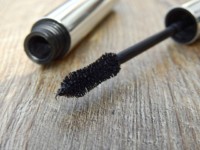
Technically, no. You can sleep with mascara on, but why would you want to? Especially, knowing what could happen. Sleeping in eye makeup, like eyeliner or mascara, will not cause any immediate issues. However, like the answer above, it does increase exposure to bacteria. Bacteria cause infection. That being said it is still not preferred.
Can Mascara or Eyeliner Cause Styes?
Yes and no. This is actually a common misconception. A stye, also called a chalazion, is a blocked oil gland in the eye. While the causes can stem from many reasons, the primary one is bacterial. The bacteria that cause styes are found on our skin. It is when these bacteria become excessive and other factors occur that a stye will happen. Bacteria on the eyelids can also cause blepharitis.
Final Thoughts
If you are thinking, “Oh no! I have slept in my makeup so many times!” Don’t worry, it is very common. Late nights, family obligations, there are so many reasons why taking off every particle of eye makeup does not always make the nightly routine. The outcome of the Australian patient is very unique. It is recommended that you take the time to gently and thoroughly remove your eye makeup before going to bed. Proper hygiene is one of the ways that you can prevent an unexpected health problem like the Australian patient.


Dr. Carlin is a highly experienced, board-certified ophthalmologist and Diplomate of the American Board of Ophthalmology with more than five decades of experience in vision care and surgical innovation. A graduate of the University of Illinois College of Medicine, he completed his ophthalmology residency at the University of Michigan before serving in the United States Navy in Key West, Florida. In 1977, he founded CarlinVision and has since built a longstanding reputation for excellence in LASIK, cataract surgery, refractive procedures, and cosmetic eyelid surgery. Throughout his career, Dr. Carlin has completed more than 11,000 procedures and remains at the forefront of advanced laser and refractive technologies. He is a Fellow of the American Academy of Ophthalmology and an active member of multiple leading professional organizations, reflecting his enduring commitment to clinical excellence and patient care.