

Exciting New Treatment for Glaucoma Patients
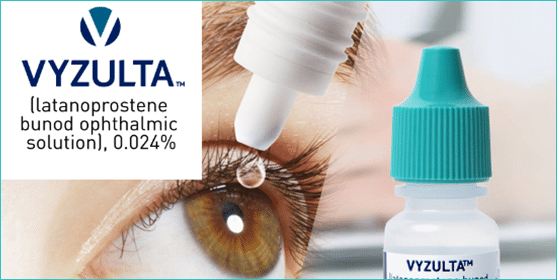
Vyzulta™, a new eye drop to treat glaucoma, is one of the outcomes of a Nobel Prize from the late 90s.
A Brief History of Glaucoma Treatments
Glaucoma has been known since antiquity. When Hippocrates described the condition of blindness in the elderly he termed it “glaykoseis”. By the mid 1800’s, still very little was known of this blinding disease but new treatments were discovered during this time. In 1850, the slit lamp microscope was invented by von Helmholtz. Finally, ophthalmologists had a way to observe the changes in the eye associated with glaucoma. The first surgical treatment was carried out by von Graefe in 1875. His treatment, an iridotomy, is still done today in patients with a type of glaucoma called angle closure. In 1862, during the American Civil War, Donders discovered that this blinding condition was associated with high intraocular pressure (IOP). The first drug treatment was discovered in 1875 with Pilocarpine which was the mainstay of therapy until the 1980’s. After that period, subsequent medications were discovered with less side effects and better effectiveness such as Timolol, Dorzolamide, Brimonidine, and Latanoprost.
Drug therapy for glaucoma has always focused on the lowering of high intraocular pressure. However, even with treatment, 10-12% of patients will still proceed to blindness in the involved eye. Other ways to medically treat glaucoma have been proposed but still have not been available for ophthalmologists to use until now.
A New Generation of Treatment and Vyzulta
A new class of biochemical compounds, Nitrous Oxide, was discovered by Dr. Louis Ignarro in the 1980’s that eventually showed promise to lower intraocular pressure in a different manner. Along with two other researchers, they were awarded the Nobel Prize for medicine in 1998.
Vyzulta (latanoprostene bunod ophthalmic solution 0.024%) is the newest medication available to treat glaucoma using the new Nitrous Oxide pathway in the eye. It is cleared by the FDA (since November 2017). This new generation of treatment increases outflow of fluid from within the eye through two, rather than one, pathway. There is also some hope that this type of new compound will be found through future study to finally protect the optic nerve and reduce the blindness that can occur as a complication.

Dr. Carlin is a highly experienced, board-certified ophthalmologist and Diplomate of the American Board of Ophthalmology with more than five decades of experience in vision care and surgical innovation. A graduate of the University of Illinois College of Medicine, he completed his ophthalmology residency at the University of Michigan before serving in the United States Navy in Key West, Florida. In 1977, he founded CarlinVision and has since built a longstanding reputation for excellence in LASIK, cataract surgery, refractive procedures, and cosmetic eyelid surgery. Throughout his career, Dr. Carlin has completed more than 11,000 procedures and remains at the forefront of advanced laser and refractive technologies. He is a Fellow of the American Academy of Ophthalmology and an active member of multiple leading professional organizations, reflecting his enduring commitment to clinical excellence and patient care.