

Told You're Not a LASIK Candidate? Here's How We Decide Whether EVO ICL Fits Your Eyes
A surprising number of people start asking, "Am I a candidate for EVO ICL?" right after hearing the word "no" about LASIK. Thin corneas, a strong nearsighted prescription, or eyes that already run dry can all take laser vision correction off the table. EVO ICL works differently, and for many of those patients it reopens the door to seeing clearly without glasses or contacts. Here is how the CarlinVision team in Snellville works through the decision, one question at a time.
The Lens Itself, in Plain Terms
EVO ICL is a phakic implantable collamer lens. "Phakic" means your natural lens stays in place. The flexible implant sits behind the iris and in front of your natural lens, where it corrects nearsightedness; a toric version can also correct astigmatism. It is made from Collamer, a biocompatible material with built-in ultraviolet protection, and once it is in place, it is invisible to others and needs no cleaning or maintenance.
Unlike LASIK, the procedure does not remove corneal tissue or reshape the cornea. That single difference is why EVO ICL is often the answer for patients whose corneas cannot safely undergo laser treatment. If you are still weighing the two approaches side by side, our comparison of LASIK vs EVO ICL walks through the trade-offs.
Signals That Point Toward EVO ICL
No single factor decides candidacy, but these are the situations where EVO ICL most often comes up during an evaluation at CarlinVision:
- A high nearsighted prescription. EVO ICL can treat a broad range of nearsightedness, including levels that fall outside the preferred range for laser correction.
- Thin corneas. Because no tissue is removed, corneal thickness that rules out LASIK does not automatically rule out an implantable lens.
- Dry eye concerns. The cornea is not reshaped, which can make EVO ICL a better fit for patients whose eyes already tend toward dryness.
- A stable prescription and healthy eyes. Like any vision correction procedure, EVO ICL works best when your vision has stopped changing, and the rest of the eye is healthy.
The Measurement That Can Settle It: Room Inside the Eye
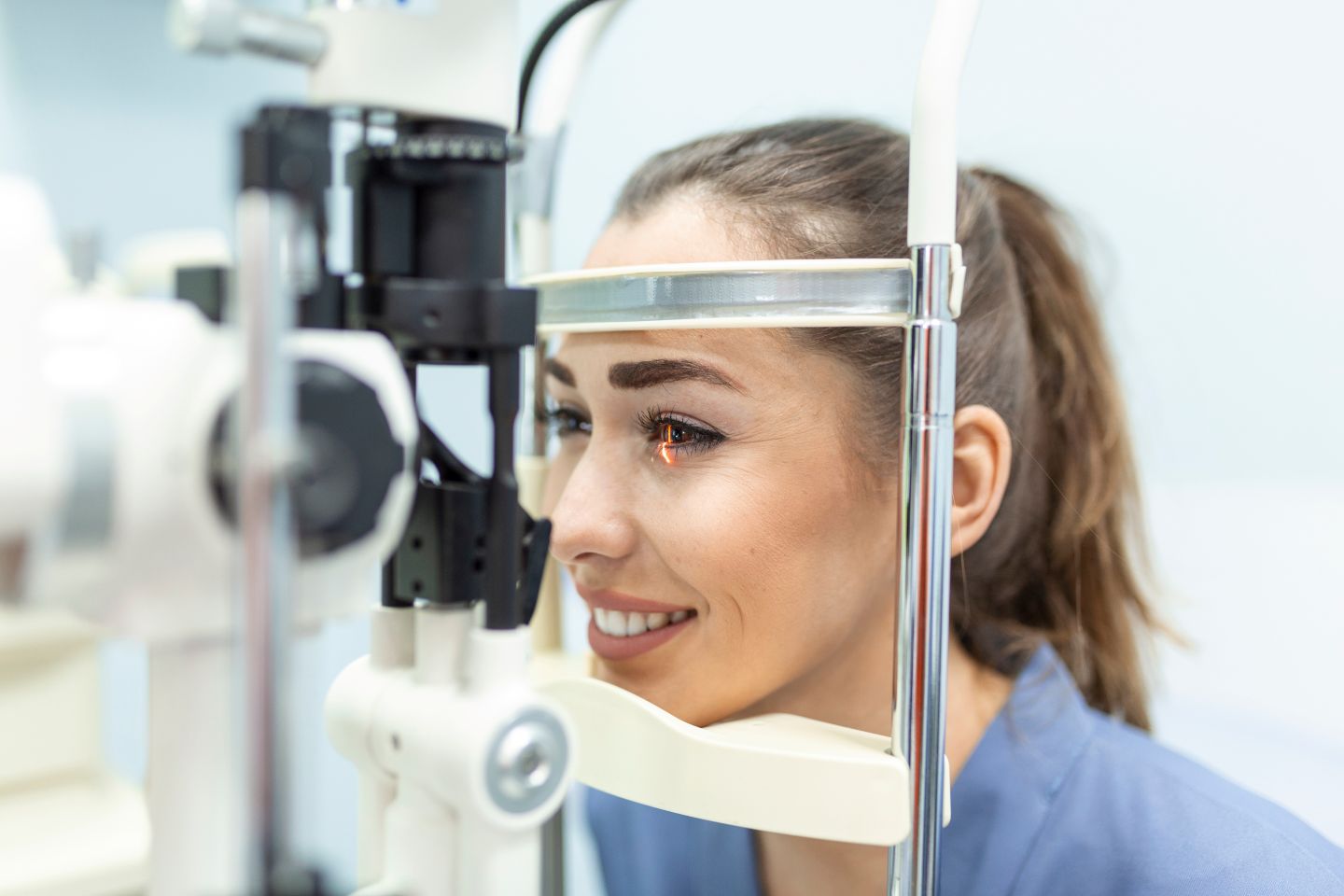
The one requirement that is unique to an implantable lens is space. The lens must fit comfortably between the iris and your natural lens, so your evaluation includes detailed measurements of the front chamber of the eye, along with your corneal thickness, prescription history, and overall eye health. These findings determine whether an ICL is suitable and which lens power and size best support your goals.
The evaluation itself is thorough but straightforward. Our team examines your eyes, reviews your vision history and how your prescription has changed, and talks through what you want from vision correction, whether that is freedom from contacts at the gym or clear vision for night driving. We then explain the benefits and limitations of an ICL for your specific eyes.
EVO ICL lenses are ordered to match each patient's prescription and eye dimensions rather than taken off a shelf, which is why the measurements at your evaluation matter so much.
When a Different Procedure Is the Better Fit
Sometimes the measurements point elsewhere, and that is not a dead end. CarlinVision is one of very few Atlanta-area practices offering every major refractive option: LASIK, laser cataract surgery, premium lens implants, refractive lens exchange, and phakic implantable lenses. For example, patients better suited to replacing the natural lens may be guided toward refractive lens exchange instead. Because we perform all of them, the recommendation you hear is based on your measurements, not on the technology a practice owns.
Surgery Day and the Days That Follow
EVO ICL is an outpatient procedure that takes about 15 to 30 minutes per eye. We use numbing drops, and we may provide medication to help you relax. Through a small incision, the folded lens is inserted and positioned behind the iris. In most cases, the incision heals without stitches, and when both eyes need treatment, they are typically done separately.
Visual recovery is usually quick. Many patients notice clearer vision within 24 to 48 hours, avoid driving for that first day or two, and resume most normal activities, including returning to work, within one to two days. For the first one to two weeks, avoid rubbing your eyes, getting water or soap in them, and strenuous activity. Full healing takes about one to three months, and follow-up visits let our team check lens position, eye pressure, and healing along the way.
Questions That Come Up at Nearly Every Evaluation
Is the lens permanent?
EVO ICL is designed to stay in place long-term. Because no corneal tissue is removed, the lens can be removed or replaced if it becomes medically necessary, although that would require another procedure.
Will I still need glasses?
Most patients who have an ICL do not need glasses afterward, though some still find them useful for certain distances or activities depending on their prescription and eye health.
How do I find out what EVO ICL costs for me?
Because every lens is customized, pricing depends on your prescription and treatment plan. Our article on what goes into EVO ICL cost explains the factors, and your consultation includes a complete, transparent quote.
Who Evaluates Your Eyes
CarlinVision is the largest and most experienced eye care practice in Gwinnett County and has been serving this community for 50 years. Our board-certified ophthalmologists perform the full range of refractive surgery, and the practice also includes an in-house retina specialist, a dedicated dry eye service, pediatric eye care, and an on-site Optical Boutique, so the team that measures your eyes for EVO ICL can care for them for decades afterward. We take the time to treat every patient like a neighbor. You can see who is on our surgical team before you come in.
Get Measured First, Decide Second
The fastest way to a real answer is a set of measurements. Learn more about the procedure on our EVO ICL and phakic lens page, then contact us today to schedule your free candidacy evaluation.

is board certified by the American Board of Ophthalmology and a Fellow in the American Academy of Ophthalmology. He is a member of the Association for Research in Vision and Ophthalmology and the American Society of Cataract and Refractive Surgery.